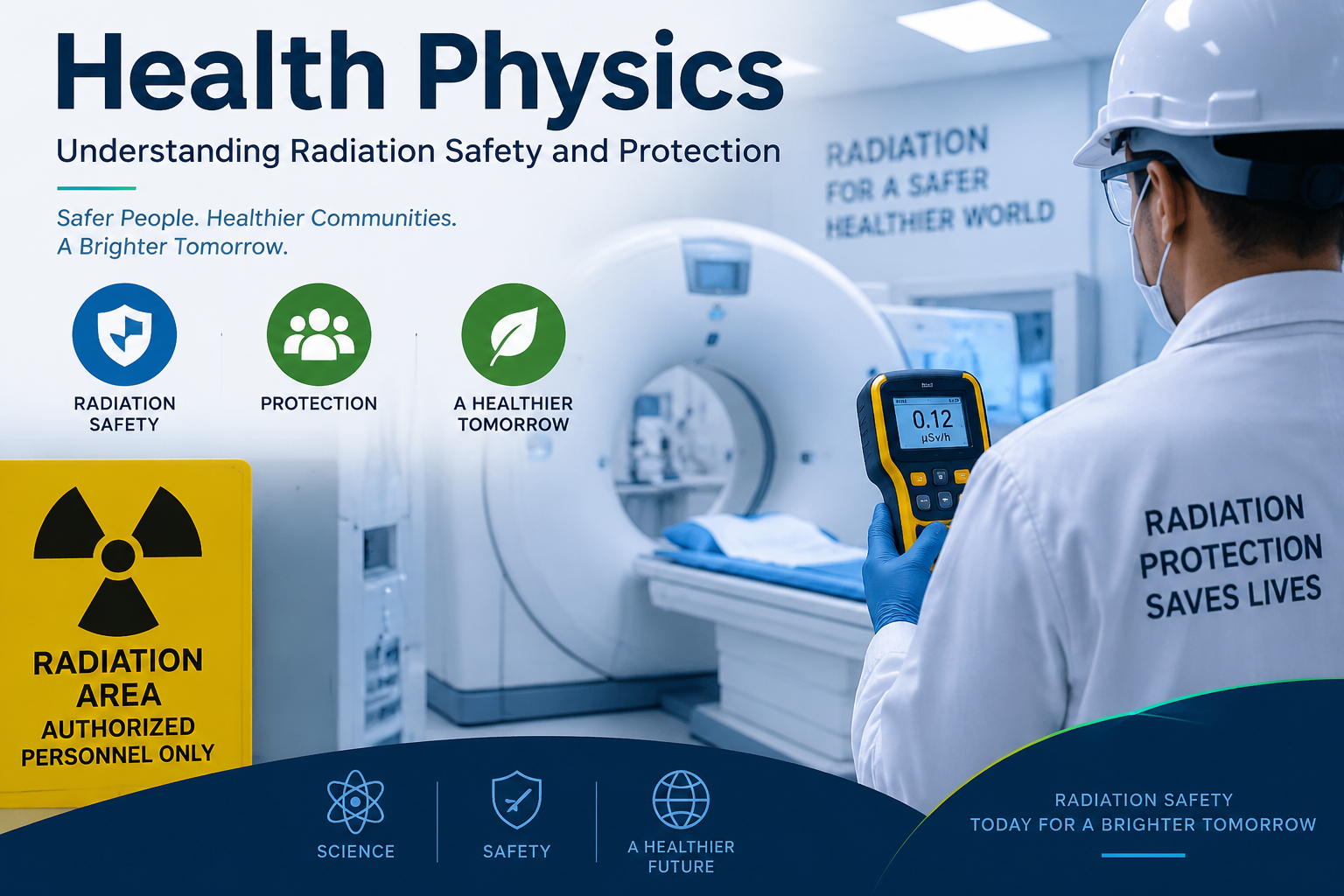
Radiation is an essential part of modern life, powering technologies used in medical imaging, cancer treatment, nuclear energy, and scientific research. However, improper exposure to ionizing radiation can create serious health risks. Health Physics provides the scientific methods and safety practices needed to protect people from harmful radiation while allowing society to benefit from its applications. Through effective Radiation Safety, monitoring systems, and professional radiation protection strategies, health physicists help reduce unnecessary exposure and maintain safe environments.
What Is Health Physics?
Health Physics is the branch of applied science focused on protecting people, workers, and the environment from the harmful effects of ionizing radiation. It combines principles of physics, biology, engineering, and safety management to measure radiation levels, evaluate risks, and develop protective procedures.
The field is also known as radiation protection science because its main purpose is to ensure that radiation is used safely. Health physicists work in hospitals, nuclear power facilities, research laboratories, government agencies, and environmental monitoring organizations.
Main Responsibilities of Health Physicists
Health physicists typically perform tasks such as:
- Measuring radiation levels in workplaces
- Monitoring occupational radiation exposure
- Designing radiation shielding systems
- Managing radioactive materials safely
- Ensuring compliance with radiation regulations
- Educating workers about radiation risks
- Developing emergency response plans
Their role is especially important in environments where radioactive materials or radiation-producing equipment are regularly used.
Importance of Radiation Safety
Radiation Safety refers to the practices and procedures designed to reduce unnecessary exposure to ionizing radiation. While radiation has valuable applications, excessive exposure may damage biological tissues and increase health risks.
Radiation safety programs focus on controlling exposure through:
- Proper planning before radiation use
- Regular monitoring and measurement
- Protective equipment
- Worker training
- Safe handling procedures
Organizations such as the Health Physics Society support scientific approaches to radiation safety and promote professional standards in this field.
Why Radiation Safety Is Important
Radiation safety protects:
| Area | Importance |
| Healthcare workers | Reduces occupational radiation exposure |
| Patients | Ensures medical benefits with minimum radiation dose |
| Researchers | Prevents laboratory radiation hazards |
| Environment | Controls radioactive contamination |
| Public | Minimizes unnecessary radiation risks |
Principles of Radiation Protection
Effective Radiation Protection is based on internationally recognized principles designed to minimize radiation exposure while maintaining useful applications.
The three major principles are:
1. Justification
Every radiation procedure should provide a clear benefit that outweighs potential risks.
For example, an X-ray examination should only be performed when it provides important medical information.
2. Optimization
Radiation exposure should be kept as low as reasonably achievable. This principle is commonly known as ALARA (As Low As Reasonably Achievable).
Optimization involves:
- Using modern equipment
- Improving procedures
- Reducing unnecessary exposure time
- Selecting appropriate radiation doses
3. Dose Limitation
Radiation workers and the public should not exceed recommended radiation dose limits established by regulatory organizations.
The Three Basic Methods of Radiation Protection
Radiation protection mainly follows three simple strategies:
Time
Reducing the amount of time spent near a radiation source decreases exposure.
Distance
Increasing the distance from a radiation source significantly lowers radiation intensity.
Shielding
Using protective materials such as lead, concrete, or specialized barriers reduces radiation exposure.
These methods are widely applied in hospitals, nuclear facilities, and industrial workplaces.
Medical Radiation Safety: Protecting Patients and Healthcare Workers
Modern medicine depends heavily on radiation-based technologies, including:
- X-rays
- Computed tomography (CT)
- Nuclear medicine imaging
- Radiation therapy
Although these technologies provide life-saving benefits, they require careful management to avoid unnecessary exposure.
Medical Radiation Safety focuses on balancing diagnostic and treatment benefits with radiation risks.
How Medical Radiation Safety Works
Healthcare facilities maintain safety through:
Equipment Quality Control
Machines are regularly tested to ensure accurate performance and appropriate radiation output.
Patient Dose Optimization
Medical professionals adjust radiation levels according to patient needs.
Staff Protection
Healthcare workers use:
- Lead aprons
- Thyroid shields
- Radiation monitoring badges
- Protective barriers
Professional Training
Radiologists, technicians, and medical physicists receive training to apply radiation safely.
Role of Dosimetry in Health Physics
Dosimetry is the measurement and assessment of radiation dose received by individuals or materials. It is a critical part of radiation protection programs.
Types of Dosimetry
Personal Dosimetry
Used to monitor radiation exposure among workers.
Examples include:
- Film badges
- Electronic dosimeters
- Thermoluminescent dosimeters
Environmental Dosimetry
Measures radiation levels in surrounding areas.
Medical Dosimetry
Ensures accurate radiation doses during cancer treatment and medical procedures.
Radiation Detection and Monitoring Equipment
Health physicists use specialized instruments to detect and measure radiation.
Common devices include:
- Geiger-Müller counters
- Ionization chambers
- Scintillation detectors
- Personal dosimeters
- Radiation survey meters
These tools help identify radiation hazards and maintain safe working conditions.
Applications of Health Physics
Health Physics has applications across many industries.
Healthcare
Hospitals use health physics principles for:
- Diagnostic imaging safety
- Radiation therapy planning
- Nuclear medicine protection
Medical physicists play an important role in ensuring radiation technologies are used safely and effectively.
Nuclear Energy
Nuclear facilities depend on health physicists to:
- Monitor radiation levels
- Control radioactive materials
- Protect workers
Research Laboratories
Scientists working with radioactive materials require radiation safety programs to prevent accidental exposure.
Environmental Protection
Health physics helps monitor radioactive contamination and protect ecosystems.
Career Opportunities in Health Physics
Health physics offers career opportunities for students and professionals interested in physics, healthcare, and safety sciences.
Common career paths include:
- Health Physicist
- Radiation Safety Officer
- Medical Physicist
- Radiation Protection Specialist
- Nuclear Safety Consultant
- Environmental Radiation Specialist
A career in this field usually requires education in physics, nuclear science, medical physics, or related disciplines.
Future of Health Physics and Radiation Protection
Advancements in technology continue to improve radiation safety.
Emerging developments include:
- Artificial intelligence for radiation monitoring
- Automated dose tracking systems
- Advanced radiation detectors
- Improved medical imaging techniques
Artificial intelligence is being explored as a tool to support radiation protection decisions and improve monitoring efficiency.
As the use of radiation technologies grows, the importance of skilled health physics professionals will continue to increase.
Conclusion
Health Physics plays a vital role in making radiation technology safer for society. From hospitals and nuclear facilities to research laboratories, health physicists apply scientific principles to measure radiation, control exposure, and protect human health.
Through effective Radiation Safety, advanced Radiation Protection methods, and strong Medical Radiation Safety practices, we can continue using the benefits of radiation while reducing unnecessary risks. Understanding health physics helps professionals and the public recognize that radiation is not only a potential hazard but also a powerful tool when managed responsibly.
FAQs About Health Physics
1. What is Health Physics in simple words?
Health Physics is the science of protecting people and the environment from harmful radiation exposure.
2. What does a health physicist do?
A health physicist measures radiation levels, manages safety programs, monitors exposure, and develops protection strategies.
3. What are the main principles of radiation protection?
The main principles are justification, optimization, and dose limitation.
4. Why is medical radiation safety important?
Medical radiation safety ensures patients receive the benefits of imaging and treatment while minimizing unnecessary radiation exposure.
5. What are the three methods of radiation protection?
The three basic methods are reducing exposure time, increasing distance, and using shielding.
6. Where do health physicists work?
They work in hospitals, nuclear power plants, research institutions, government agencies, and environmental organizations.
