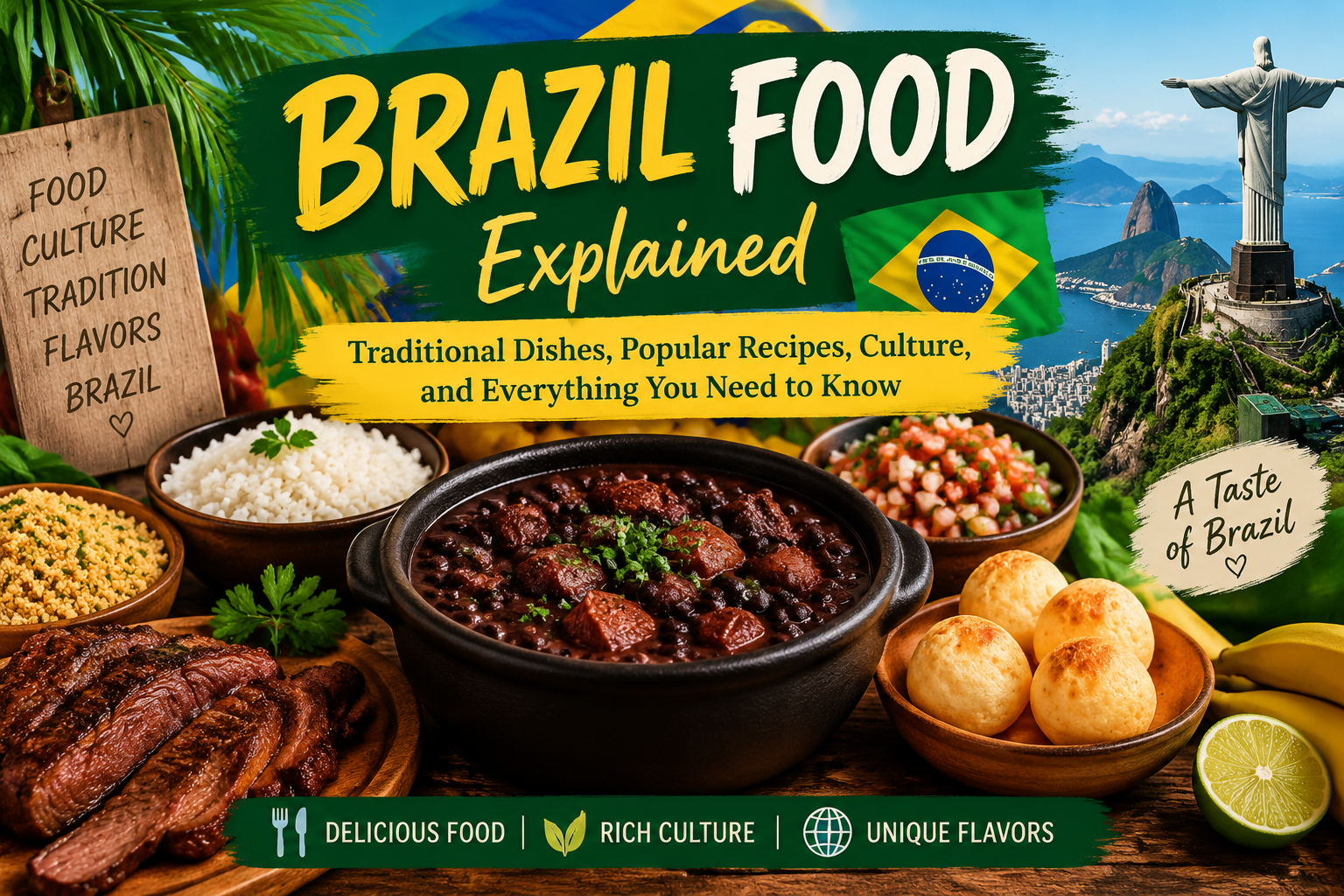
Brazil is known worldwide for football, beaches, and vibrant festivals, but many travellers miss one of its greatest treasures: its food culture. The challenge is that Brazilian cuisine is often misunderstood as only featuring meat dishes or tropical fruits, while the reality is a diverse culinary tradition shaped by Indigenous, African, Portuguese, and immigrant influences. The solution is to explore Brazil food through its regional dishes, traditional cooking methods, and cultural history to understand why Brazilian cuisine is one of the most unique food experiences in the world.
Brazilian food combines bold flavours, fresh ingredients, slow cooking techniques, and centuries of cultural exchange. From the famous feijoada stew to street foods like coxinha and acarajé, every dish tells a story about Brazil’s history, geography, and people.
Understanding Brazilian Food Culture and Traditions
Brazilian food culture reflects the country’s multicultural identity. With a huge territory covering different climates and landscapes, Brazil developed unique regional cuisines rather than a single national style.
The foundation of Brazilian cuisine comes from three major influences:
Indigenous Influence
Native Brazilian communities introduced ingredients that remain essential today, including:
- Cassava (mandioca)
- Corn
- Peppers
- Fish
- Tropical fruits
- Herbs and spices
Cassava, in particular, became one of Brazil’s most important ingredients and appears in products such as farofa, tapioca, and cassava flour.
Portuguese Influence
Portuguese colonisation introduced:
- Rice and beans combinations
- Bread-making techniques
- Sugar production
- Salted cod recipes
- Various desserts
Many Brazilian dishes still carry Portuguese cooking traditions, especially in coastal areas.
African Influence
African culture deeply shaped Brazilian cuisine through:
- Spices
- Palm oil (azeite de dendê)
- Seafood-based dishes
- Stews
- Street food traditions
Foods like acarajé and vatapá show strong African-Brazilian heritage, especially in Bahia.
Popular Brazilian Dishes and Recipes
Brazil offers hundreds of traditional dishes, but some foods have become symbols of Brazilian identity.
Feijoada: Brazil’s Most Famous Traditional Dish
Feijoada is often considered Brazil’s national dish. It is a slow-cooked black bean stew prepared with different cuts of pork, including sausages and smoked meats.
Traditionally served with:
- White rice
- Farofa
- Orange slices
- Brazilian-style greens
Feijoada represents Brazil’s history of combining simple ingredients into a rich and satisfying meal.
Today, many Brazilian restaurants serve feijoada on weekends as a cultural dining experience.
Churrasco: The Brazilian Barbecue Tradition
Churrasco is Brazil’s famous barbecue style, especially popular in southern regions such as Rio Grande do Sul.
Unlike ordinary grilling, Brazilian churrasco focuses on:
- High-quality cuts of meat
- Open-fire cooking
- Simple seasoning
- Traditional serving methods
Popular meats include:
- Picanha (top sirloin cap)
- Beef ribs
- Sausages
- Chicken
Brazilian barbecue restaurants, known as churrascarias, offer a unique dining experience where grilled meats are served continuously.
Pão de Queijo: Brazilian Cheese Bread
Pão de queijo is one of Brazil’s most loved snacks. These small, round cheese breads have a crispy outside and soft, chewy texture.
Main ingredients include:
- Cassava flour
- Cheese
- Eggs
- Milk
Originating from Minas Gerais, pão de queijo is now enjoyed throughout Brazil for breakfast, coffee breaks, and casual snacks.
Coxinha: Brazil’s Popular Street Food
Coxinha is a famous Brazilian snack shaped like a chicken drumstick.
It usually contains:
- Shredded chicken filling
- Cream cheese or soft cheese
- Dough made from flour and broth
- Crispy fried coating
Coxinha is commonly found in bakeries, cafés, and street food markets across Brazil.
Acarajé: A Traditional Afro-Brazilian Food
Acarajé comes from Bahia and represents the strong African influence on Brazilian cuisine.
It is made from:
- Black-eyed pea dough
- Deep-fried in palm oil
- Filled with shrimp, sauces, and spicy mixtures
This dish is especially connected with Bahian culture and religious traditions.
Moqueca: Brazilian Seafood Stew
Moqueca is a coastal Brazilian dish made with fish, seafood, coconut milk, tomatoes, peppers, and spices.
Two famous versions include:
Moqueca Baiana
Influenced by African cuisine, it usually includes:
- Coconut milk
- Palm oil
- Strong spices
Moqueca Capixaba
From Espírito Santo, this version focuses more on seafood flavour and uses different seasoning techniques.
Brigadeiro: Brazil’s Favourite Sweet Treat
Brigadeiro is a traditional Brazilian dessert made from:
- Condensed milk
- Cocoa powder
- Butter
- Chocolate sprinkles
It is especially popular at birthday celebrations and family gatherings.
Despite its simple ingredients, brigadeiro has become an important symbol of Brazilian celebrations.
Regional Food Traditions Across Brazil
Brazil’s enormous size creates distinct regional cuisines.
Northern Brazilian Cuisine
The Amazon region focuses on:
- Freshwater fish
- Cassava
- Tropical fruits
- Indigenous ingredients
Popular foods include:
- Tacacá
- Açaí dishes
- Maniçoba
Northeastern Brazilian Cuisine
Northeast Brazil is famous for strong African and Indigenous influences.
Popular dishes include:
- Acarajé
- Baião de dois
- Carne de sol
- Tapioca
The region is known for spicy flavours and seafood-based meals.
Southeastern Brazilian Cuisine
The southeast includes cities like São Paulo and Rio de Janeiro.
Common foods include:
- Feijoada
- Pão de queijo
- Pastel
- Brigadeiro
This region also reflects strong European immigration influences.
Southern Brazilian Cuisine
Southern Brazil has strong European traditions, especially from Italian and German immigrants.
Popular foods include:
- Churrasco
- Sausages
- Pasta dishes
- Wine-based cuisine
Traditional Ingredients Used in Brazilian Cooking
Brazilian cuisine depends on a variety of local ingredients.
Cassava
Cassava is one of Brazil’s most important food sources. It appears in:
- Flour
- Snacks
- Bread
- Side dishes
Beans
Beans are a daily staple in Brazil and are commonly paired with rice.
Tropical Fruits
Brazil produces many unique fruits, including:
- Açaí
- Passion fruit
- Guava
- Papaya
- Mango
Seafood
Coastal regions use fresh seafood in many traditional recipes.
Brazilian Food Habits and Dining Culture
Food in Brazil is strongly connected with family and social gatherings.
Common Brazilian dining traditions include:
- Long family meals
- Sharing food with guests
- Weekend barbecues
- Coffee breaks with snacks
Lunch is often considered the main meal of the day, usually including rice, beans, protein, and vegetables.
Brazilian hospitality also plays an important role. Offering food to guests is considered a sign of warmth and friendship.
Popular Brazilian Recipes to Try at Home
If you want to experience Brazilian cuisine, these recipes are great starting points:
| Recipe | Main Ingredients |
| Feijoada | Black beans, pork, sausages |
| Pão de Queijo | Cassava flour, cheese, eggs |
| Coxinha | Chicken, dough, spices |
| Brigadeiro | Chocolate, condensed milk |
| Moqueca | Fish, coconut milk, peppers |
| Farofa | Cassava flour, butter, seasonings |
Why Brazilian Cuisine Is Loved Worldwide
Brazilian food has gained global popularity because it offers:
Rich Cultural History
Every dish represents centuries of cultural exchange.
Diverse Flavours
Brazilian cuisine balances:
- Sweet
- Spicy
- Smoky
- Fresh flavours
Simple Yet Powerful Ingredients
Many traditional recipes use basic ingredients transformed through unique techniques.
Regional Variety
Travellers can experience completely different food traditions within the same country.
Conclusion: Exploring the Rich World of Brazil Food
Brazil food is much more than a collection of recipes. It represents the country’s history, cultural diversity, and connection between communities. From the comforting flavours of feijoada to the street-food charm of coxinha and the coastal freshness of moqueca, Brazilian cuisine offers something for every taste.
Understanding Brazilian food culture allows people to discover the traditions, stories, and influences behind each dish. Whether you are planning a trip to Brazil or simply exploring international recipes at home, these traditional foods provide an authentic taste of one of the world’s most fascinating culinary cultures.
FAQs About Brazilian Food
What is the most famous food in Brazil?
Feijoada is widely considered one of Brazil’s most famous traditional dishes. It is a black bean stew cooked with pork and served with rice and side dishes.
What food is Brazil known for?
Brazil is known for feijoada, churrasco, pão de queijo, coxinha, acarajé, moqueca, and brigadeiro.
What do Brazilians eat every day?
Many Brazilians commonly eat rice, beans, meat, vegetables, and salads as part of their daily meals.
Is Brazilian food spicy?
Some Brazilian dishes are spicy, especially from regions like Bahia, but many traditional foods focus more on herbs, spices, and natural flavours rather than extreme heat.
What are popular Brazilian street foods?
Popular Brazilian street foods include coxinha, pastel, acarajé, tapioca, and pão de queijo.

One thought on “Brazil Food Explained: Traditional Dishes, Popular Recipes, Culture, and Everything You Need to Know”