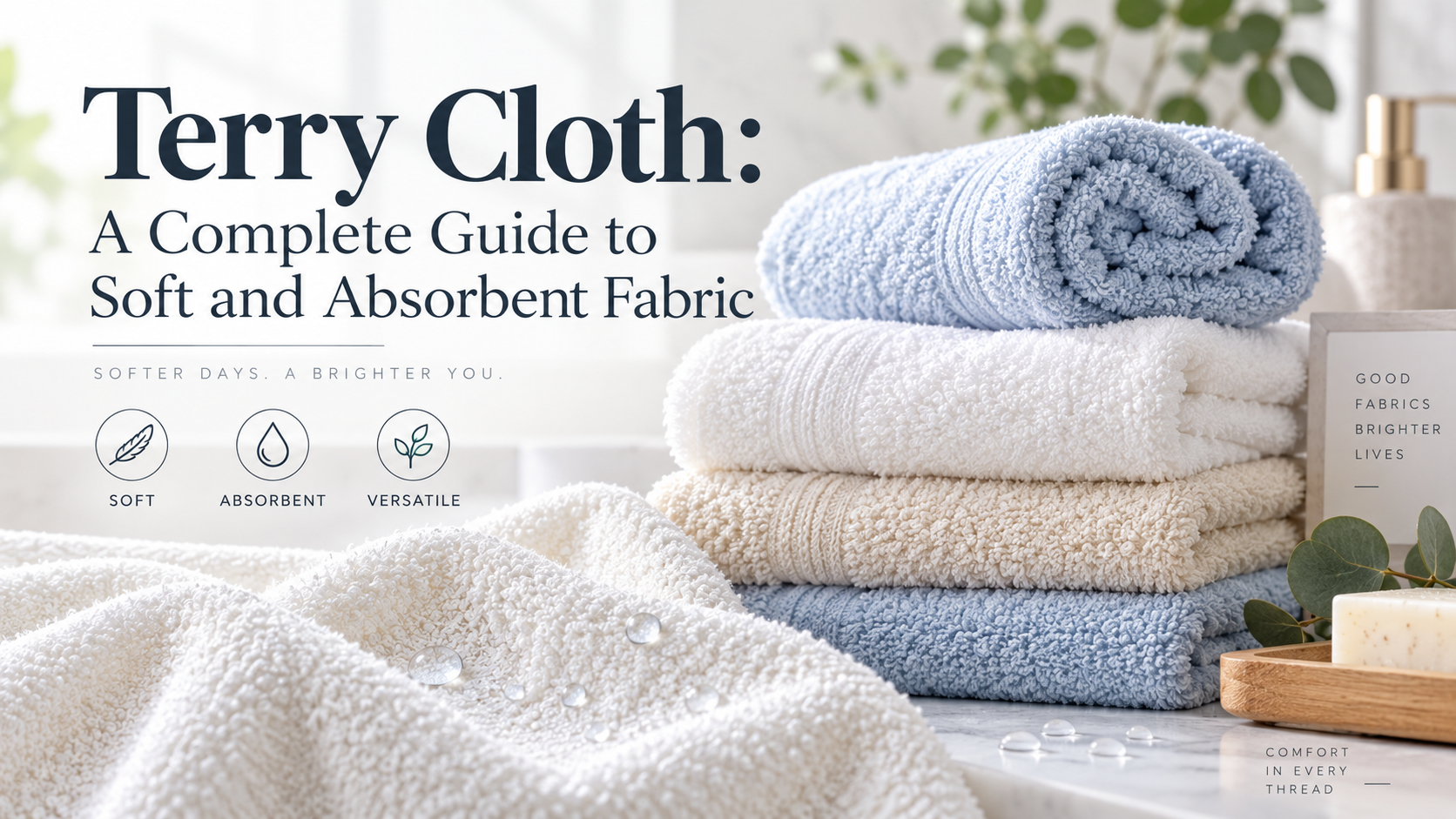
Choosing the right fabric can be challenging when you need something that feels soft, lasts longer, and absorbs moisture effectively. Many fabrics offer comfort but fail when it comes to quick drying and water absorption, while others absorb moisture but become rough after repeated washing. Terry cloth solves this problem with its unique looped structure, providing exceptional softness, durability, and absorbency. This versatile fabric is widely used in towels, bathrobes, baby products, cleaning materials, and everyday textiles because of its ability to combine comfort with practical performance.
What Is Terry Cloth?
Terry cloth is a soft, absorbent textile made with raised loops of yarn on one or both sides of the fabric. These loops create extra surface area, allowing the material to absorb large amounts of water while maintaining a comfortable feel against the skin.
Unlike ordinary woven fabrics, terry cloth uses a special pile construction where additional yarn creates uncut loops. These loops act like tiny moisture-catching structures, which is why terry cloth is commonly used for bath towels, robes, and other products where absorbency is important.
Although cotton is the most common material used for terry cloth, manufacturers may also produce it using blended fibers such as polyester, bamboo, or other textiles depending on the required performance and price range.
How Is Terry Cloth Fabric Made?
The production of terry cloth fabric involves a specialized weaving process that creates the signature looped surface.
During manufacturing, the fabric uses:
- Ground warp yarns that create the base structure.
- Pile yarns that form the raised loops.
- Weaving tension adjustments that control loop height and density.
The loops can appear on one side or both sides of the fabric. Double-sided terry usually provides greater absorbency because it contains more exposed loops.
The quality of terry cloth depends on several factors:
- Fiber quality
- Yarn strength
- Loop density
- Fabric weight (GSM)
- Finishing process
A well-made terry fabric maintains softness even after repeated washing and daily use.
Types of Terry Cloth Fabric
Terry cloth is available in different varieties depending on construction, fiber, and intended use.
1. Cotton Terry Cloth
Cotton terry cloth is the most popular type because cotton naturally absorbs moisture and provides excellent comfort.
Benefits include:
- High water absorption
- Breathable texture
- Soft feel
- Long-lasting performance
- Skin-friendly properties
Premium cotton terry often uses long-staple cotton fibers because they create stronger and smoother yarns. These fabrics usually feel softer and resist wear better than lower-quality cotton options.
2. French Terry
French terry is a knitted version of terry fabric. Unlike traditional towel terry, it usually has smooth fabric on one side and loops on the inside.
It is commonly used for:
- Sweatshirts
- Hoodies
- Joggers
- Casual clothing
French terry provides comfort and flexibility but is generally less absorbent than woven towel terry.
3. Terry Velour
Terry velour is created by cutting the loops on one side of the fabric to produce a smoother, velvet-like surface.
It offers:
- A luxurious appearance
- Soft touch
- Decorative appeal
However, cutting the loops can reduce some absorbency compared with traditional looped terry cloth.
Why Is Cotton Terry Cloth So Popular?
Cotton terry cloth remains a preferred choice because it balances softness, durability, and moisture control.
High Absorbency
The looped structure increases the fabric’s surface area, allowing it to hold more water. This makes cotton terry ideal for towels, bathrobes, and spa textiles.
Soft and Comfortable
Cotton fibers create a gentle texture suitable for direct skin contact. With proper washing, high-quality terry towels often become even softer over time.
Durable Construction
Good-quality cotton terry can withstand frequent washing, making it suitable for households, hotels, gyms, and healthcare environments.
Breathable Material
Unlike many synthetic fabrics, cotton allows better airflow, helping products feel comfortable during use.
Terry Cloth Towels: Why They Are the Best Choice for Drying
Terry cloth towels are among the most common applications of this fabric. Their popularity comes from the combination of softness and moisture absorption.
A quality terry towel should have:
| Feature | Importance |
| High GSM | Provides thickness and better absorbency |
| Dense loops | Improves water absorption |
| Strong stitching | Increases durability |
| Quality cotton | Enhances softness and lifespan |
Towels with higher GSM generally feel thicker and more luxurious. However, very heavy towels may take longer to dry compared with lighter options.
Understanding GSM in Terry Cloth
GSM means grams per square meter and measures fabric weight. It is an important indicator of terry cloth quality.
Low GSM (200–350)
Suitable for:
- Lightweight towels
- Gym towels
- Travel towels
Advantages:
- Dries quickly
- Easy to carry
Disadvantages:
- Less plush
- Lower absorbency
Medium GSM (350–600)
Suitable for:
- Everyday bath towels
- Household use
- Hotel towels
Advantages:
- Good balance of softness and drying speed
High GSM (600+)
Suitable for:
- Luxury towels
- Spa products
- Premium bathrobes
Advantages:
- Extremely soft
- Maximum absorbency
Disadvantages:
- Heavier
- Takes longer to dry
Common Uses of Terry Cloth
Because of its absorbent and comfortable properties, terry cloth is used in many products.
Bathroom Products
- Bath towels
- Hand towels
- Washcloths
- Bathrobes
Clothing
- Baby clothing
- Beachwear
- Loungewear
- Casual garments
Healthcare and Beauty
- Spa towels
- Salon wraps
- Beauty treatment fabrics
Household Cleaning
- Cleaning cloths
- Kitchen towels
- Polishing materials
How to Choose High-Quality Terry Cloth
Before buying terry cloth products, consider these factors:
Check Fabric Weight
A higher GSM usually indicates thicker and more absorbent fabric, but the ideal choice depends on usage.
Look at Loop Quality
Dense and evenly distributed loops usually indicate better construction.
Choose Better Cotton
Long-staple or ring-spun cotton generally provides improved softness and durability.
Consider Purpose
A lightweight towel may be better for travel, while a heavier towel works well for luxury bathroom use.
How to Care for Terry Cloth Towels
Proper care helps maintain softness and absorbency.
Follow these tips:
- Wash towels before first use.
- Avoid excessive fabric softeners because they can reduce absorbency.
- Use moderate washing temperatures.
- Allow towels to dry completely.
- Avoid overloading the washing machine.
Regular care prevents fiber damage and keeps the loops fluffy for longer.
Terry Cloth vs Other Fabrics
| Feature | Terry Cloth | Microfiber | Regular Cotton |
| Absorbency | Very high | High | Medium |
| Softness | Excellent | Smooth | Good |
| Breathability | Excellent | Moderate | Excellent |
| Common Uses | Towels, robes | Cleaning, sports | Clothing, bedding |
Terry cloth remains a preferred option when softness and water absorption are the main priorities.
Frequently Asked Questions About Terry Cloth
Is terry cloth always made from cotton?
No. Although cotton is the most common material, terry cloth can also be produced using polyester, bamboo, or blended fibers.
Are terry cloth towels good for everyday use?
Yes. Cotton terry towels are durable, absorbent, and comfortable for daily bathing and household use.
What GSM is best for bath towels?
A GSM between 400 and 600 is often considered a good balance between softness, absorbency, and drying time.
Is French terry the same as terry cloth?
No. French terry is a knitted fabric mainly used for clothing, while traditional terry cloth is commonly woven for towels and bath products.
Conclusion
Terry cloth remains one of the most practical and reliable fabrics because it combines softness, durability, and exceptional moisture absorption. Its unique looped structure makes it ideal for products such as cotton terry cloth towels, bathrobes, baby items, and household textiles.
When choosing terry cloth, factors such as cotton quality, GSM, loop density, and intended use determine the overall performance. Whether you need a lightweight towel for travel or a luxurious bath towel for everyday comfort, understanding terry cloth fabric helps you make a smarter choice.
