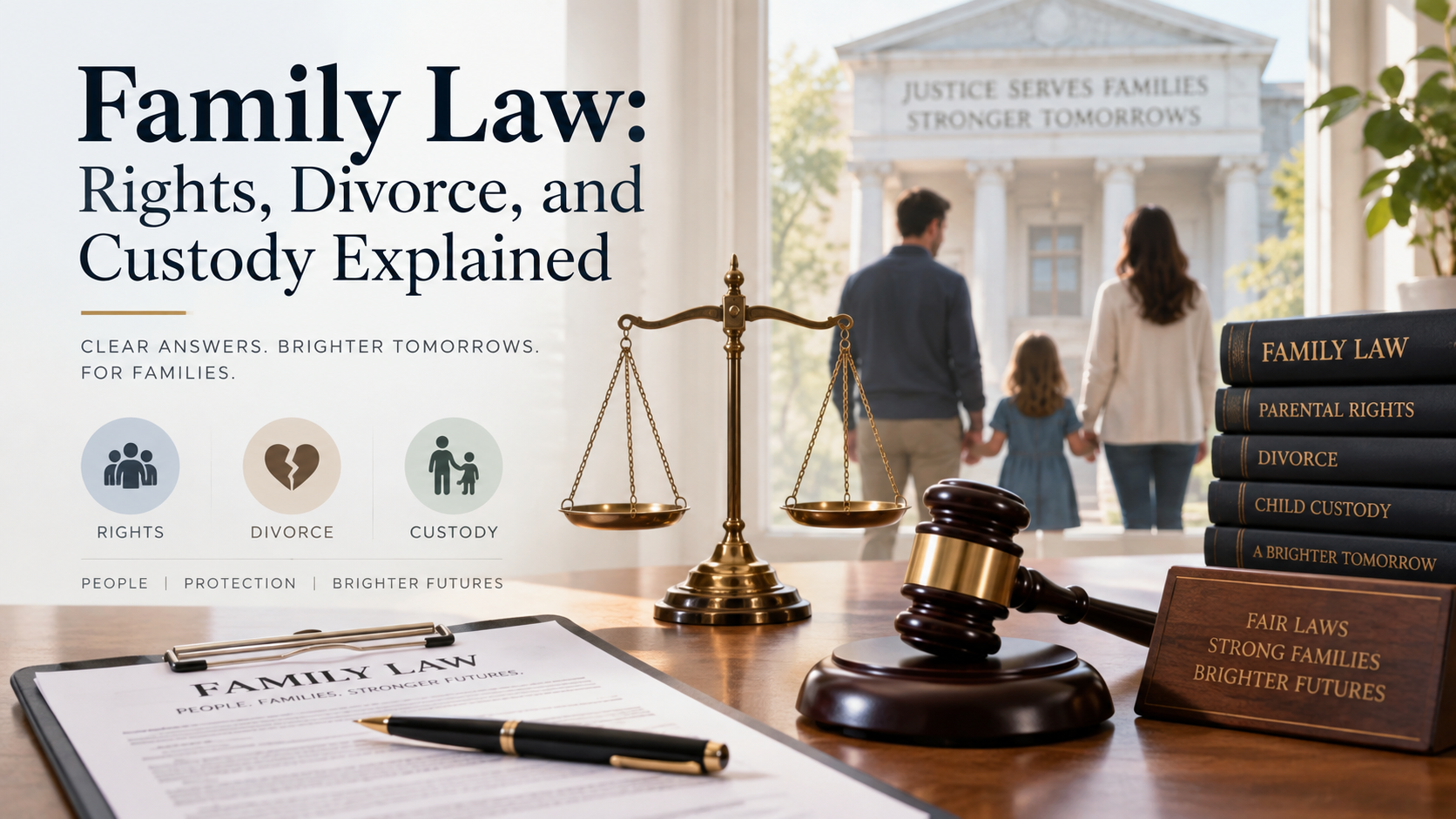
Family disputes involving marriage, divorce, child custody, and financial responsibilities can become complicated without proper legal guidance. Many people do not understand their rights or the legal processes involved, which can lead to poor decisions during stressful situations. Family law provides a legal framework to resolve these issues fairly by protecting individuals, children, and families. Understanding what is family law, how it works, and when it applies can help people make informed decisions and seek the right legal support.
What Is Family Law?
Family law is a branch of civil law that deals with legal matters involving family relationships. It covers issues such as marriage, divorce, child custody, adoption, domestic relationships, and financial responsibilities between family members.
The primary purpose of family law is to protect the rights and interests of individuals while helping resolve disputes through legal procedures. Unlike criminal law, family law focuses mainly on personal relationships and responsibilities rather than punishment.
A Family Law Definition can be explained as:
Family law is the area of law that regulates legal relationships between family members and provides solutions for disputes related to marriage, children, and family responsibilities.
Family laws may differ depending on the country, state, or jurisdiction because they are influenced by local legal systems, cultural practices, and government regulations.
Importance of Family Law
Families often face challenging situations that require legal solutions. Without proper laws, disputes involving children, property, or personal rights could become difficult to resolve.
Family law helps by:
- Protecting individual legal rights
- Ensuring children’s welfare
- Providing fair divorce procedures
- Establishing financial responsibilities
- Resolving conflicts between family members
The goal of family law is not only to solve disputes but also to create stability and fairness during major life changes.
Types of Family Law Cases
There are several types of Family Law Cases that courts commonly handle. These cases involve different aspects of family relationships and responsibilities.
1. Divorce and Separation Cases
Divorce is one of the most common areas of family law. It involves legally ending a marriage and addressing related issues such as:
- Division of property
- Financial support
- Child custody arrangements
- Spousal support
Family courts aim to ensure that both parties receive fair treatment during the divorce process.
2. Child Custody Cases
Child custody determines who will have responsibility for raising and caring for children after parents separate or divorce.
Courts usually consider:
- The child’s best interests
- Parent-child relationships
- Safety and stability
- Each parent’s ability to provide care
Custody decisions may include:
- Physical custody (where the child lives)
- Legal custody (who makes important decisions)
3. Child Support Cases
Child support laws ensure that both parents contribute financially to their child’s needs.
Support may cover:
- Education expenses
- Healthcare costs
- Food and housing
- Daily living expenses
The amount of support usually depends on factors such as parental income and the child’s requirements.
4. Adoption Cases
Family law also manages legal adoption procedures. Adoption laws ensure that children receive proper protection and that adoptive parents meet legal requirements.
5. Domestic Violence Cases
Family courts may handle protection orders and legal remedies for individuals experiencing domestic abuse or violence.
These laws help protect victims and provide legal safety measures.
Understanding Family Legal Rights
Family Legal Rights refer to the protections and responsibilities individuals have under family law.
These rights may include:
Right to Marriage
Individuals generally have the legal right to enter into marriage according to applicable laws and requirements.
Right to Divorce
In many legal systems, individuals have the right to seek divorce through established legal procedures.
Parental Rights
Parents usually have rights regarding:
- Raising their children
- Making important decisions
- Maintaining relationships with children
Property and Financial Rights
Family law may determine how property, assets, and financial responsibilities are handled during separation or divorce.
Understanding these rights helps people protect their interests during family disputes.
How Does the Family Law Process Work?
The family law process varies depending on the type of case, but it generally follows several steps.
1. Legal Consultation
The first step is usually speaking with a family law attorney who can explain available options and legal rights.
2. Filing Legal Documents
A person begins a case by submitting required documents to the appropriate court.
3. Negotiation or Mediation
Many family disputes are resolved through mediation, where both parties work together with a neutral professional to reach an agreement.
Benefits of mediation include:
- Lower costs
- Faster resolution
- Reduced conflict
4. Court Hearing
If an agreement cannot be reached, the case may proceed to court, where a judge reviews evidence and makes a legal decision.
Role of a Family Law Attorney
A family law attorney helps clients understand their legal options and represents them during family-related disputes.
They may assist with:
- Divorce paperwork
- Custody agreements
- Property division
- Child support matters
- Legal negotiations
A qualified attorney can help reduce mistakes and ensure that legal procedures are properly followed.
Divorce and Family Law: Important Considerations
Divorce is not only an emotional process but also a legal one. Several important factors must be addressed, including:
| Issue | Description |
| Property Division | How assets and debts are separated |
| Child Custody | Parenting arrangements after divorce |
| Child Support | Financial responsibilities for children |
| Spousal Support | Financial assistance between spouses |
| Legal Documentation | Required court paperwork |
Understanding these areas helps individuals prepare for the legal challenges of divorce.
Child Custody and the Best Interests of Children
Child custody decisions focus mainly on protecting children’s emotional and physical well-being.
Courts often evaluate:
- Parent stability
- Living environment
- Educational needs
- Emotional bonds
- Safety concerns
The main objective is to create a custody arrangement that supports the child’s healthy development.
Family Law Mediation vs Court Proceedings
| Mediation | Court Proceedings |
| Less formal | More formal |
| Usually faster | Can take longer |
| Private discussions | Public legal process |
| Parties create agreements | Judge makes decisions |
Many families choose mediation because it allows more control over the final outcome.
Why Understanding Family Law Matters
Knowledge of family law helps individuals:
- Recognize their legal rights
- Make informed decisions
- Protect their children
- Avoid unnecessary conflicts
- Navigate difficult situations confidently
Whether dealing with marriage, divorce, or custody issues, understanding legal responsibilities can make the process easier.
Conclusion
Family law plays an essential role in protecting relationships, resolving disputes, and ensuring fairness within families. Understanding what is family law, its common cases, and family legal rights helps individuals handle important life changes with greater confidence.
From divorce and child custody to adoption and financial responsibilities, family law provides legal solutions that protect both adults and children. Seeking proper legal guidance and understanding available options can help families reach fair and stable outcomes during challenging times.
FAQs About Family Law
1. What is family law in simple terms?
Family law is the area of law that deals with legal issues involving families, including marriage, divorce, children, and financial responsibilities.
2. What are common family law cases?
Common cases include divorce, child custody, child support, adoption, and domestic violence protection.
3. Why is family law important?
Family law protects people’s rights and provides legal solutions for family disputes.
4. What does a family law attorney do?
A family law attorney provides legal advice and helps clients with divorce, custody, and other family-related matters.
5. How are child custody decisions made?
Courts usually make custody decisions based on the best interests of the child.
6. Can family law cases be settled without going to court?
Yes, many family disputes can be resolved through negotiation or mediation.
