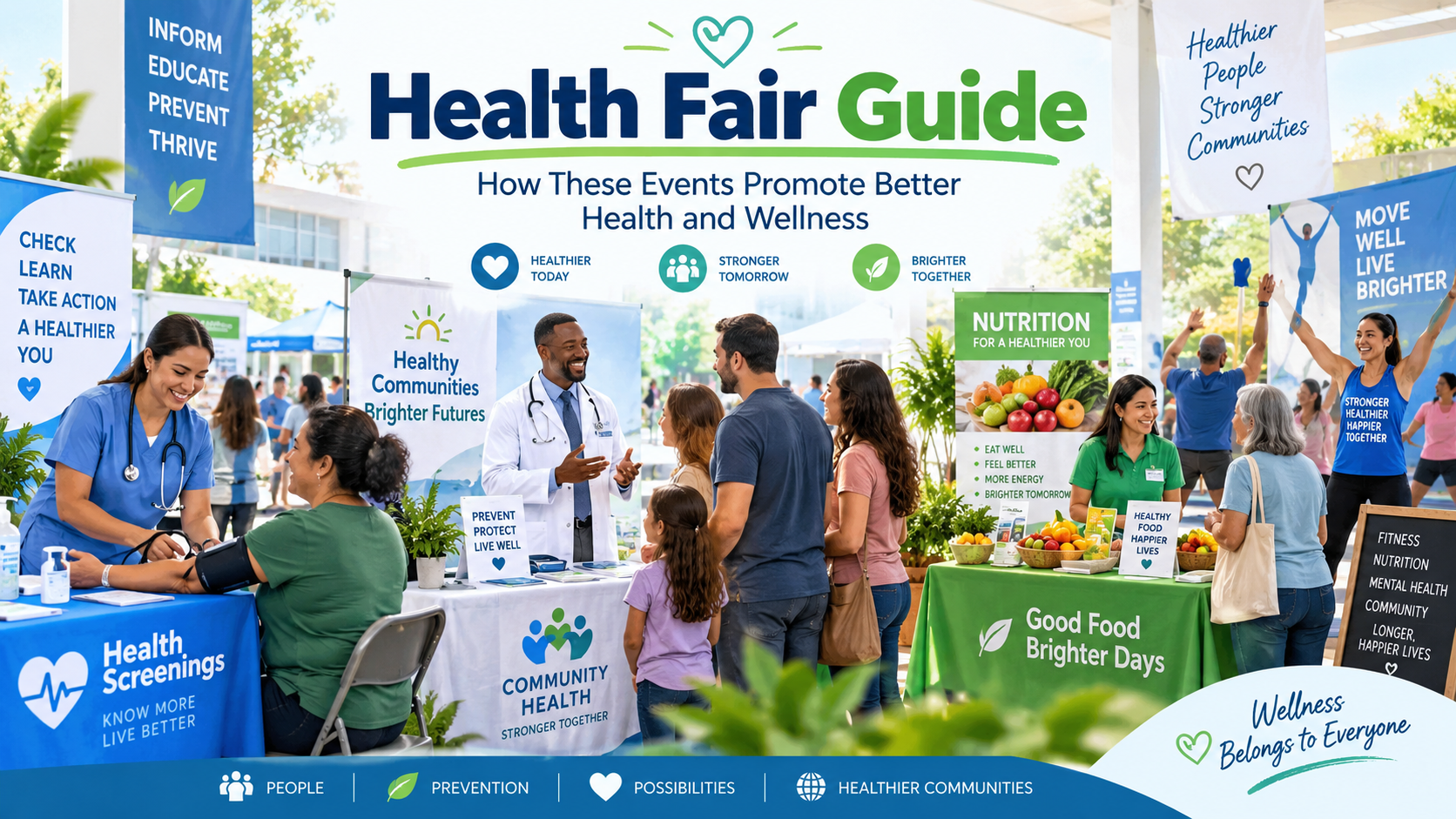
Many people delay medical checkups because of cost, lack of awareness, or limited access to healthcare services. A health fair provides a practical solution by bringing healthcare professionals, preventive screenings, wellness education, and community resources together in one accessible event. These gatherings help people understand their health status, identify potential risks early, and learn simple lifestyle changes that support long-term well-being.
Unlike traditional medical appointments that focus mainly on treating illness, health fairs emphasize prevention, awareness, and community engagement. From blood pressure checks and nutrition counseling to fitness demonstrations and mental health resources, these events create an environment where people can take proactive steps toward a healthier lifestyle.
What Is a Health Fair?
A health fair is an educational and interactive event designed to promote preventive healthcare, wellness awareness, and access to health-related services. These events are commonly organized by hospitals, schools, workplaces, nonprofit organizations, and community groups.
The primary goal of a health fair is to connect people with healthcare information and basic screening services before serious health problems develop. Many fairs include healthcare providers, fitness experts, nutrition specialists, and local wellness organizations that offer guidance on improving overall health.
A typical health fair may include:
- Blood pressure testing
- Cholesterol and glucose screening
- Body mass index (BMI) assessment
- Nutrition advice
- Fitness demonstrations
- Vaccination information
- Mental health resources
- Health education booths
These events are especially valuable for individuals who may not regularly visit healthcare providers or have limited access to preventive services.
Why Are Health Fairs Important for Communities?
Healthcare is not only about treating diseases after they appear; prevention plays a major role in improving public health. Community health fairs help close the gap between healthcare providers and residents by making essential information and services easier to access.
A community health fair can benefit neighborhoods by:
1. Increasing Health Awareness
Many people are unaware of their risk factors for conditions such as hypertension, diabetes, or heart disease. Health fairs provide basic screenings and explain health results in an easy-to-understand way.
Early awareness encourages individuals to seek professional medical advice when necessary.
2. Encouraging Preventive Healthcare
Preventive care helps identify potential health concerns before they become serious. Regular screenings, healthy lifestyle education, and vaccination awareness can reduce future healthcare challenges.
3. Supporting Underserved Populations
Community-based health fairs often provide resources to people who face barriers such as transportation issues, financial limitations, or limited healthcare knowledge. Research has highlighted community health fairs as useful tools for providing health promotion, education, and screening services to hard-to-reach populations.
4. Building Stronger Community Connections
Health fairs bring together healthcare providers, local organizations, families, and community members. This creates opportunities for people to discover available health resources and build supportive networks.
What Happens at a Health Screening Event?
A health screening event is one of the most important parts of a health fair. These screenings provide quick assessments that help individuals understand important health indicators.
Common screenings include:
| Screening | Purpose |
| Blood Pressure Check | Detect possible hypertension risks |
| Blood Glucose Test | Identify diabetes-related concerns |
| Cholesterol Screening | Assess cardiovascular risk factors |
| BMI Measurement | Evaluate weight-related health risks |
| Vision Screening | Detect possible vision problems |
| Dental Checkups | Promote oral health awareness |
Health screenings at fairs are not a replacement for professional medical diagnosis, but they can encourage people to follow up with healthcare providers when abnormal results appear.
Popular Wellness Fair Activities
A successful wellness fair includes more than medical screenings. Interactive activities help visitors learn healthy habits in an engaging way.
Some popular wellness fair activities include:
Fitness Demonstrations
Exercise professionals may provide:
- Yoga sessions
- Stretching demonstrations
- Walking programs
- Strength training guidance
These activities encourage people to incorporate physical movement into their daily routines.
Nutrition Workshops
Nutrition experts often teach visitors about:
- Balanced meal planning
- Healthy food choices
- Reading food labels
- Managing sugar intake
Simple nutrition education can help people make better decisions at home.
Mental Health Awareness Sessions
Many modern health fairs include mental wellness resources such as:
- Stress management workshops
- Meditation sessions
- Counseling information
- Emotional wellness education
Mental health awareness helps reduce stigma and encourages people to seek support when needed.
Healthy Lifestyle Games and Demonstrations
Some fairs use interactive activities, games, and demonstrations to make health education enjoyable for children and adults. Schools and community organizations often include taste-testing stations, health booths, and physical activity demonstrations.
Benefits of Attending a Health Fair
Participating in a health fair offers several advantages:
Free or Affordable Health Resources
Many health fairs provide low-cost or free services, allowing people to access basic health information without expensive medical visits.
Early Detection of Health Risks
Simple screenings can reveal warning signs that may require further medical attention.
Learning From Health Professionals
Visitors can directly communicate with nurses, doctors, nutritionists, and wellness experts.
Discovering Local Healthcare Services
Attendees often learn about:
- Community clinics
- Support programs
- Fitness centers
- Health education resources
Motivation for Lifestyle Changes
Health fairs often inspire people to improve habits related to:
- Diet
- Exercise
- Sleep
- Stress management
How to Organize a Successful Community Health Fair
Planning a successful health fair requires clear goals, proper organization, and community involvement.
1. Define Your Purpose
Before planning, determine the main objective:
- Increasing health awareness
- Providing screenings
- Promoting healthy lifestyles
- Connecting residents with healthcare resources
2. Choose the Right Location
The venue should be easy to access and suitable for visitors. Common locations include:
- Schools
- Community centers
- Workplaces
- Parks
- Religious centers
3. Partner With Healthcare Organizations
Collaborating with hospitals, clinics, fitness experts, and nonprofit organizations improves the quality of services offered.
4. Promote the Event
Effective promotion can include:
- Social media announcements
- Local advertisements
- Community newsletters
- School and workplace communication
Health fair planning resources emphasize the importance of setting goals, selecting appropriate services, involving partners, and promoting the event effectively.
Health Fair vs Wellness Fair: What Is the Difference?
Although the terms are often used interchangeably, there is a slight difference.
| Health Fair | Wellness Fair |
| Focuses more on medical awareness and screenings | Focuses on overall lifestyle improvement |
| Includes health tests and medical information | Includes fitness, nutrition, and mental wellness activities |
| Often organized by healthcare providers | Often includes wellness organizations and lifestyle experts |
Many modern events combine both approaches to create complete health experiences.
How Health Fairs Promote Long-Term Wellness
The biggest impact of a health fair is not only what happens during the event but what people do afterward.
A successful fair encourages visitors to:
- Schedule regular checkups
- Improve eating habits
- Exercise regularly
- Manage stress
- Monitor important health indicators
By increasing awareness and providing practical resources, health fairs help create healthier individuals and stronger communities.
Conclusion
A health fair is more than a temporary health event; it is a bridge between healthcare professionals and the community. Through screenings, education, and interactive wellness activities, these events encourage prevention and empower people to make better health decisions.
Whether organized as a community health fair, workplace wellness program, or public health campaign, these gatherings provide valuable opportunities to detect risks early, learn healthy habits, and connect with important healthcare resources. Investing in health awareness today can lead to healthier communities tomorrow.
Frequently Asked Questions (FAQs)
What is the purpose of a health fair?
The purpose of a health fair is to promote preventive healthcare by offering health education, screenings, and wellness resources to the community.
What services are offered at a health fair?
Common services include blood pressure checks, glucose testing, cholesterol screening, nutrition advice, fitness activities, and health education.
Are health fair screenings accurate?
Health fair screenings provide useful information but should not replace professional medical diagnosis. Abnormal results should be discussed with a healthcare provider.
Who can attend a community health fair?
Most community health fairs are open to residents of all ages, including families, seniors, and individuals interested in improving their health.
What activities are included in a wellness fair?
Wellness fair activities may include exercise demonstrations, nutrition workshops, mental health sessions, cooking demonstrations, and lifestyle education.
How do health fairs improve public health?
Health fairs improve public health by increasing awareness, encouraging preventive care, and connecting people with healthcare services.
