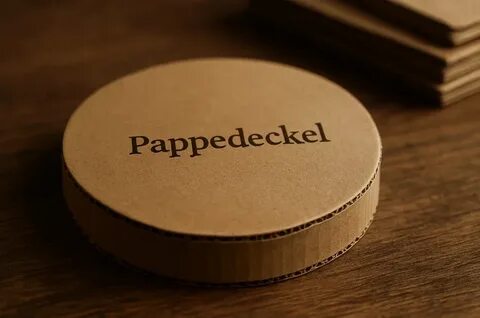
The word Pappedeckel may sound unusual to people who are not familiar with German language and culture. However, it is an interesting term with connections to everyday life, traditional expressions, and the German way of describing simple objects. Understanding Pappedeckel provides an opportunity to explore not only the meaning of a word but also the cultural background behind it.
In this article, we will look at what Pappedeckel means, where the term comes from, how it is used, and why it has attracted attention among people searching for its meaning.
What Does Pappedeckel Mean?
Pappedeckel is a German word that can be understood by looking at its two parts. The German word “Pappe” generally refers to cardboard or thick paperboard, while “Deckel” means a lid or cover. Therefore, the literal meaning of Pappedeckel is something similar to a cardboard lid or cardboard cover.
The term can be used to describe a simple cover made from cardboard or a similar material. Depending on the regional context, it may also have slightly different meanings or associations. Like many German words, its exact use can depend on the situation and the region where it is spoken.
The German Language and Compound Words
One reason words such as Pappedeckel can appear unfamiliar is the German language’s ability to combine words to create longer compound terms. German frequently joins two or more words together to describe an object, activity, or idea in a precise way.
Pappedeckel is a good example of this linguistic characteristic. Instead of using a separate phrase for a cardboard cover, the words can be combined into a single expression. This makes the word descriptive while also reflecting a common feature of German vocabulary.
Learning these compound words can be an interesting way for language learners to understand how German speakers describe everyday objects.
Traditional and Everyday Context
Cardboard covers and lids have been used for many practical purposes for generations. Before modern packaging became widespread, simple materials such as paperboard and cardboard were commonly used to protect, cover, or store household items.
A term such as Pappedeckel therefore has a connection to ordinary, practical life. It represents the kind of vocabulary that can develop around objects people encounter in their homes, workplaces, shops, and traditional settings.
Although modern packaging has introduced plastics, metals, and advanced materials, cardboard remains an important material because it is lightweight, affordable, and relatively easy to recycle.
Why Is Pappedeckel Interesting?
At first glance, Pappedeckel may appear to be an ordinary word describing a simple object. However, words like this can reveal interesting information about language and culture.
Every language contains expressions that are difficult to understand through direct translation alone. A literal translation may provide the basic meaning, but the cultural or regional background can provide a much deeper understanding.
Pappedeckel is interesting because it demonstrates how German vocabulary can turn a description of a material and an object into a single recognizable term.
Pappedeckel and German Culture
German culture has a strong tradition of regional vocabulary and distinctive expressions. Words may have different meanings, pronunciations, or levels of popularity depending on the region.
This makes researching a word such as Pappedeckel particularly useful for language enthusiasts. It encourages people to look beyond standard dictionary definitions and consider how words are actually used in everyday communication.
Regional expressions are also an important part of cultural identity. They can survive for generations and remain meaningful even as technology and lifestyles change.
The Importance of Understanding Context
When researching Pappedeckel, context is important. A word may have a straightforward literal meaning while also being used informally or regionally.
For this reason, people learning German should avoid assuming that every word has only one fixed interpretation. Looking at examples, regional usage, and historical references can provide a better understanding of unfamiliar vocabulary.
Context is especially important when translating German compound words into English. A direct translation may sound strange even though the original German expression is perfectly natural.
Cardboard in the Modern World
Although the word Pappedeckel has traditional linguistic associations, the material it describes remains highly relevant today. Cardboard is widely used in packaging, shipping, food containers, product boxes, and protective covers.
The popularity of cardboard has also increased because many businesses and consumers are interested in recyclable packaging solutions. Cardboard can often be processed and reused, making it an important material in modern packaging systems.
This connection between an old-fashioned material and modern sustainability demonstrates how everyday objects can remain relevant over time.
Pappedeckel as a Language Learning Example
For German learners, Pappedeckel can serve as a useful example of how compound words work. Breaking the word into smaller parts makes it easier to understand:
- Pappe – cardboard or paperboard
- Deckel – lid or cover
This method can be applied to many other German compound words. Instead of memorizing a long word as a single unit, learners can identify its individual components and understand how they work together.
Final Thoughts
Pappedeckel is a fascinating German term that illustrates the practical and descriptive nature of compound vocabulary. Its basic meaning relates to a cardboard lid or cover, but its wider interest comes from its connection to German language, regional expressions, and everyday culture.
For anyone interested in German vocabulary, traditional expressions, or the history of everyday objects, exploring words such as Pappedeckel can be both educational and enjoyable. Even a simple term can provide insight into how language develops and reflects the objects and experiences of daily life.

One thought on “Pappedeckel: Meaning, Origins, Uses, and Cultural Significance”